
Global Fund Calls for Stronger Country-Led, People-Centred Health Systems
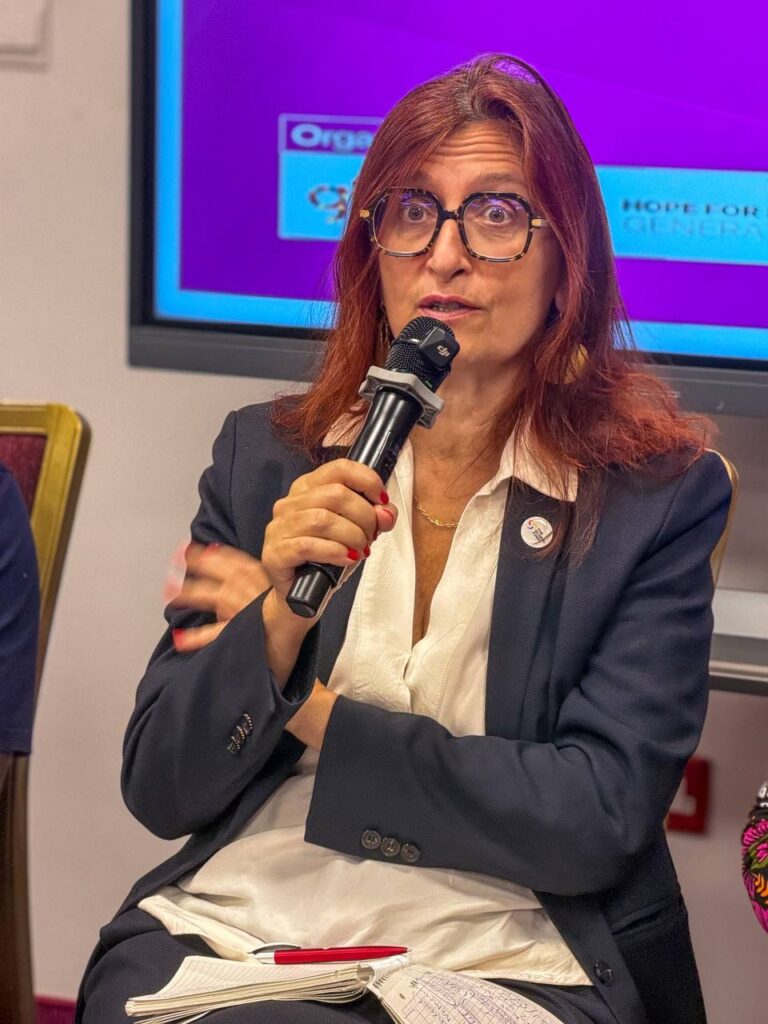
The Global Fund has reaffirmed its commitment to supporting resilient, people-centred health systems across Africa, with a renewed focus on country ownership, sustainability and community-led responses.
Delivering an address at the CSO Side Event held on the margins of the African Union Extraordinary Summit on Health in Accra, Ghana, Francoise Vanni, Director for External Relations at The Global Fund, expressed gratitude to governments, civil society organisations, implementing partners and development partners for their unwavering support during the Fund’s latest replenishment campaign.
She announced that the successful replenishment secured US$12.6 billion to support the global fight against HIV, tuberculosis (TB) and malaria over the next three years, with 79 per cent of the funding allocated to Africa to strengthen health systems and accelerate progress against the three diseases.
Ms. Vanni acknowledged the financial and operational challenges facing many partners but commended them for remaining committed to ensuring the replenishment achieved a successful outcome.
She emphasised that the changing global health landscape requires the Global Fund and its partners to adapt by placing greater emphasis on country ownership, country leadership, self-reliance and stronger health systems. She noted that the Fund would continue working alongside countries to strengthen domestic resource mobilisation, improve public financial management and support the integration of health services to ensure long-term sustainability.
Ms. Vanni outlined three strategic priorities that will guide the Global Fund’s work going forward.
The first is to move faster by accelerating access to life-saving innovations, including new HIV prevention tools such as lenacapavir and improved tuberculosis diagnostics that bring testing closer to communities.
The second is to protect smarter by directing investments to countries and populations with the greatest need while ensuring every dollar delivers the highest possible health impact through evidence-based interventions.
The third priority is to finish the fight against HIV, TB and malaria by strengthening partnerships, sustaining international solidarity and supporting community-led responses that are proven to reach vulnerable populations.
She stressed that although countries are at different stages of their journey towards self-reliance, civil society organisations and communities will continue to play a vital role in delivering essential health services and ensuring that no one is left behind.
For Hope for Future Generations (HFFG), the address strongly resonates with its commitment to strengthening community health systems, promoting health equity and working with partners to improve health outcomes across Ghana. The conference reinforced the importance of collaboration, innovation and sustained investment in building resilient, people-centred health systems capable of responding to current and future health challenges.
