Strengthening Community Systems and Advancing Action Against Skin-Related NTDs in Ghana’s Eastern Region
The project Strengthening Community Systems to Scale-Up Community-Led Response Interventions to End Neglected Tropical Diseases is making significant progress in improving the quality of life for individuals affected by skin-related Neglected Tropical Diseases (NTDs) in Ghana’s Eastern Region. Implemented across seven districts in collaboration with Rural Watch, the initiative aims to enhance community systems, improve health service access, promote financial resilience, and combat stigma and discrimination. Through coordinated advocacy and community education, the project has reached thousands of community members and continues to foster local ownership in the fight against NTDs.
Awareness and Advocacy
Under the project, community-driven interventions have significantly expanded awareness and support for persons affected by skin-related neglected tropical diseases across the seven operational districts in the Eastern Region. A total of 7,896 community members have been reached through targeted Social Behavior Change Communication (SBCC) strategies promoting hygiene, sanitation, stigma reduction, and the rights of affected persons. Complementing these efforts, mass media campaigns conducted through radio, online platforms, and community information centers have extended outreach to 32,516 people.
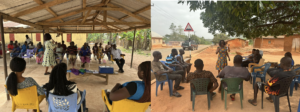
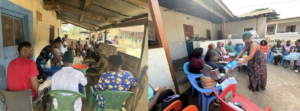
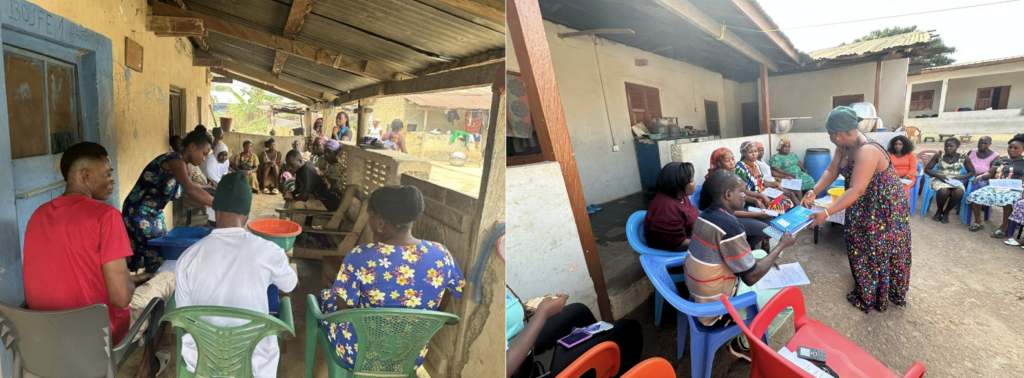
Volunteers continue to play a central role in achieving this impact by conducting house-to-house visits; facilitating small group discussions; engaging artisan associations such as hairdressing salons, tailoring shops, and mechanic workshops; and collaborating with traditional leaders to reinforce NTD awareness and encourage prevention and early treatment uptake.
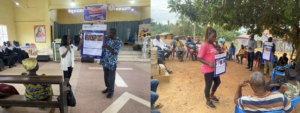
Zonal advocacy trainings have been conducted in Koforidua, Kade, and Swedru to equip NTD Advocacy Champions with skills in stakeholder engagement, strategic messaging, and action planning. Following the trainings, the Champions have begun organizing community durbars where the NTD Focal Person leads discussions on skin-related NTDs, promoting early care-seeking and addressing stigma and discrimination. Through these durbars and related engagements, over 500 community members have been directly reached with key messages on prevention and treatment. The Champions also support referrals by encouraging affected clients identified by volunteers to seek timely care.
Beyond durbars, the Advocacy Champions are leading community engagements, church sensitizations, and awareness activities during social gatherings such as funerals to further expand outreach and foster inclusive community support.
The trained champions have additionally identified environmental risk factors contributing to NTD transmission in some communities. In Oturoku, a community in the Birim North District, concerns around open refuse dumping have been raised. The champions have conducted educational sessions with traditional leaders and community members to highlight the health implications of poor waste management and its link to NTDs. As a result, advocacy efforts are underway to support the establishment of a designated refuse disposal site.
Community-driven interventions under this project have greatly expanded awareness and support for individuals impacted by skin-related NTDs in the Eastern Region. To date, 7,896 community members have been engaged through targeted Social Behavior Change Communication (SBCC) strategies that promote hygiene, sanitation, stigma reduction, and the rights of affected individuals. Mass media campaigns utilizing radio, online platforms, and community information centers have further extended outreach to 32,516 people.
Volunteers play a pivotal role in this initiative by conducting house-to-house visits, facilitating small group discussions, and collaborating with local artisan associations, including hairdressing salons, tailoring shops, and mechanic workshops. They also engage traditional leaders to reinforce awareness and encourage early prevention and treatment.
Zonal advocacy training sessions have been held in Koforidua, Kade, and Swedru, equipping NTD Advocacy Champions with essential skills in stakeholder engagement, strategic messaging, and action planning. Following this training, the champions have organized community durbars where the NTD focal person leads discussions on skin-related NTDs, promoting early care-seeking and addressing stigma. Through these durbars, over 500 community members have received vital information on prevention and treatment. The Champions also assist in referrals, encouraging affected individuals identified by volunteers to seek timely care.
In addition to durbars, advocacy champions are conducting community engagements, church sensitization events, and awareness activities during social gatherings, such as funerals, to broaden outreach and cultivate inclusive community support.
Furthermore, the trained champions have identified environmental risk factors that contribute to NTD transmission in several communities. In Oturoku, located in the Birim North District, issues related to open refuse dumping have been highlighted. The champions have organized educational sessions with traditional leaders and community members to underscore the health risks associated with poor waste management and its connection to NTDs. Advocacy efforts are now underway to establish a designated refuse disposal site.
NTD Client Support and Access to Care
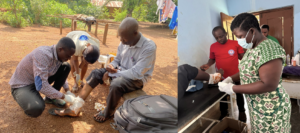
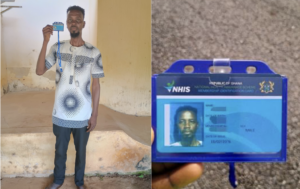
The project has significantly enhanced access to essential health services for NTD clients and their families across the operational districts. A total of 53 NTD clients and their families have received support to renew their National Health Insurance Scheme (NHIS) memberships, improving their access to essential healthcare services. Volunteers have assisted clients in accessing health facilities for wound management and NTD-related treatment, facilitating medication refills, clinical reviews, and the appropriate management of complications. Suspected cases have been screened and examined, with samples collected when necessary. In total, 699 facility visits have been supported through referral and follow-up services.
Additionally, 53 self-care wound dressing kits have been distributed to clients with severe wounds and complications. This distribution included practical demonstrations, where clients were guided step-by-step on how to clean, dress, and manage their wounds independently at home. Follow-up home visits have been conducted to reinforce correct usage and address any challenges affecting treatment adherence. Furthermore, 112 psychosocial counseling sessions have been provided by trained lay counselors through home visits and phone calls to support clients’ emotional well-being, reduce stigma, and encourage ongoing adherence to treatment.
Empowering NTD Communities Through Village Savings and Loans Associations (VSLA)
In our commitment to improving the livelihoods of the NTD clients and their families, the project has introduced the Village Savings and Loans Association (VSLA) model as a practical, community-driven solution that promotes financial independence, self-reliance, and sustainable livelihoods.
The VSLA approach encourages members to save small amounts regularly, pool their contributions into a shared fund, and access loans from their collective savings. Unlike traditional microfinance systems, VSLA groups are fully autonomous and self-managed. Each group consists of 15 to 25 members who meet weekly. Members elect a Management Committee, including a Chairperson, Records Keeper, Box Keeper, two Money Counters, and three Key Holders to ensure proper governance and accountability. All transactions are conducted transparently during meetings, and each member maintains a personal passbook to track their savings and loans. In addition to the Loan Fund, groups establish a Social Fund to assist members during emergencies.
The introduction of the VSLA model began with orientation meetings for community leaders and key stakeholders to ensure local ownership and support. This was followed by community sensitization sessions where the concept, objectives, and benefits of VSLA were explained. Interested individuals were organized into groups, assisted in drafting their constitutions, and guided through the election of leaders.
To date, seven VSLA groups have been formed across the project districts, demonstrating encouraging progress in a short period. For instance, the Nyameb3kyer3 group in Ntronang, formed on February 4, 2026, with 24 members, started with a minimum share purchase of GHS 20 and a social fund contribution of GHS 5. At their first meeting, the group saved GHS 1,100, which increased to GHS 2,180 by their second meeting, with GHS 304 accumulated in the social fund. When the group identified a lack of chairs for meetings as a challenge, five members voluntarily donated materials and labor to construct benches, showcasing remarkable ownership and collective responsibility. One member expressed gratitude for the empowerment: “Thank you for empowering us to mobilize our own resources and manage our own group, and this will help us support one another.”
Similarly, the Victory Susu Group in Afosu, formed on January 17, 2026, mobilized 24 members who saved GHS 1,300 at their first meeting. The Nyame Nsa Wom 3y3 Yie group in Old Abirem, formed on January 19, 2026, included 14 members and recorded GHS 850 in initial savings. In Akotekrom, the Nhyiramma Village Savings group, formed on January 27, 2026, with 25 members, also recorded GHS 1,300 during their first meeting. These early results reflect strong community interest and commitment to the model.
Despite these achievements, the establishment of the VSLA groups faced challenges. The geographical dispersion of clients complicated mobilization, and health-related issues affected regular participation for some individuals.
Nonetheless, the VSLA initiative is steadily enhancing financial resilience within project communities. Members are not only building savings but also developing leadership skills and fostering a sense of community ownership.